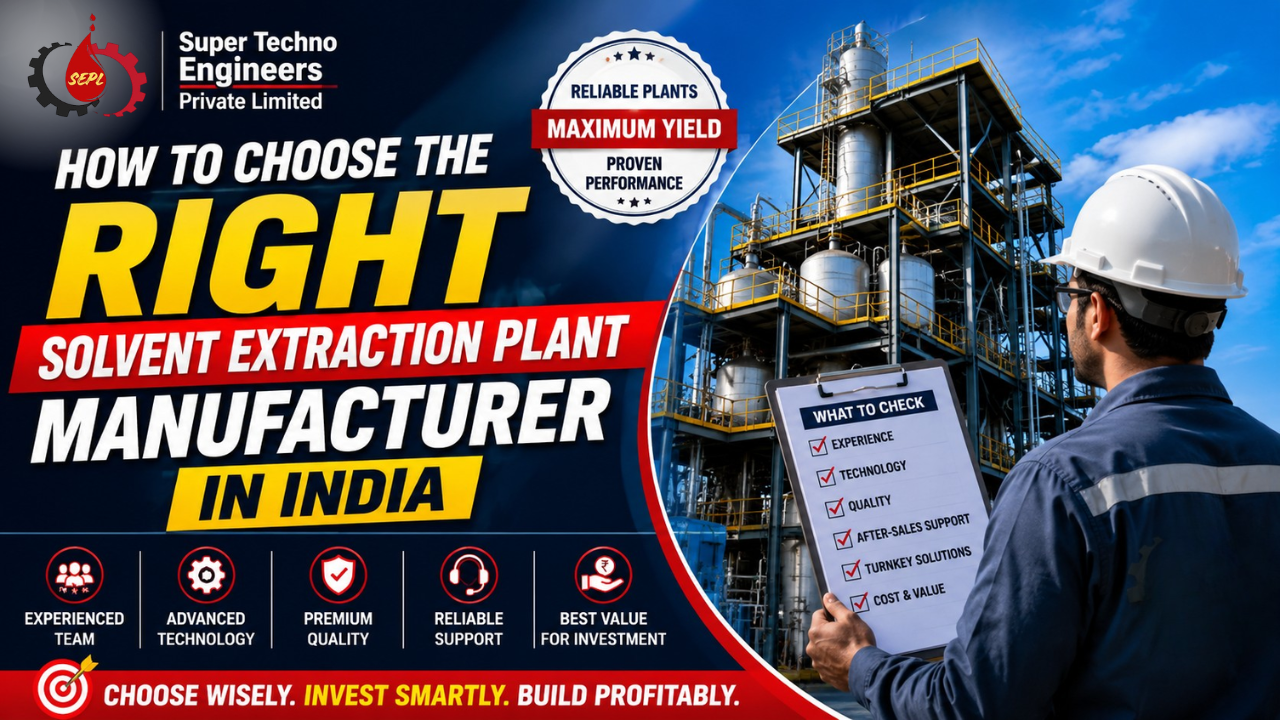
Setting up an oil extraction facility is a long-term investment. The equipment you choose will run for years, and the manufacturer behind it will define how smooth or rough that journey is. So choosing the right solvent extraction plant manufacturer in India is not a decision you should rush.
There are dozens of manufacturers in India, especially in Gujarat and other industrial hubs. Some are genuinely experienced. Others are not. And the difference between the two can cost you lakhs in downtime, poor oil recovery, and constant maintenance issues.
This guide will walk you through every factor you need to check before you sign on the dotted line.
Why India Is a Strong Hub for Solvent Extraction Plant Manufacturing
India has been manufacturing solvent extraction plants for decades. The country has a strong base of engineering talent, access to quality raw materials, and a mature edible oil processing industry that has pushed manufacturers to constantly improve their technology.
Indian manufacturers today export plants to Africa, Southeast Asia, the Middle East, and beyond. The oil extraction plant manufacturers here are capable of handling projects from 50 TPD to 1000+ TPD capacity, and many offer full EPC (Engineering, Procurement, and Construction) services.
But with so many options available, how do you identify the right one for your project?
1. Check Their Experience and Track Record
Experience matters a lot in this industry. A manufacturer who has been building solvent extraction plants for 10 to 15+ years has dealt with more edge cases, more project challenges, and more varied client requirements than someone who started recently.
When you speak with a manufacturer, ask:
– How many plants have they delivered?
– Do they have projects in your country or region?
– Can they share references or completed project case studies?
A reliable solvent extraction plant supplier in India will have no hesitation in showing you their project history. If they are vague or evasive about past work, that is a red flag.
2. Evaluate Their Technical Capabilities
Not all manufacturers build the same quality of plant. There is a significant difference in how plants are designed, how efficient the extraction process is, and what kind of technology goes into each unit.
Here are the key technical areas to evaluate:
Extraction Efficiency: A well-designed plant should give you maximum oil recovery with minimum solvent (hexane) consumption. Ask for the hexane loss figures per tonne of seed processed.
DTDC Design: The De-solventizer Toaster Dryer Cooler (DTDC) is one of the most critical components. A properly designed DTDC ensures low residual hexane in the meal and better steam efficiency.
Miscella Distillation: A good 5-stage miscella distillation system ensures high hexane recovery, which directly reduces your operating costs.
Seed Preparation Equipment: Before any extraction happens, the seed needs to be properly cleaned, cracked, cooked, flaked, and expanded. A manufacturer who handles the full oilseed preparation section can optimize the entire process as one integrated system.
If the manufacturer only supplies the extraction section and sources the preparation equipment from elsewhere, integration quality can suffer.
3. Look for Full Turnkey Capability
A turnkey solvent extraction plant means the manufacturer handles everything from design and procurement to civil work, installation, and commissioning. You get a single point of responsibility.
This is important because when multiple vendors are involved, accountability often falls in the gaps. If the extractor and the DTDC come from different suppliers, and something goes wrong, each one will blame the other.
When evaluating turnkey capability, check:
– Do they handle civil drawings and layout planning?
– Do they supervise erection and installation?
– Do they do trial runs and commissioning on-site?
– Do they train your operators before handing over the plant?
A manufacturer who offers end-to-end EPC services is almost always a safer choice than one who just sells equipment.
4.Ask About Spares Availability and After-Sales Support
This is often the most overlooked factor during the buying process, and also the one that causes the most pain later.
Your plant will need spare parts. Bearings, seals, chains, spray nozzles, conveyor components, and other wear parts need to be replaced periodically. If your manufacturer cannot supply these quickly, your plant sits idle.
Ask the manufacturer:
– Do you stock critical spares?
– What is the typical lead time for parts?
– Do you have a dedicated service team for after-sales support?
You can browse the range of solvent extraction plant spares and equipment that a reliable supplier should be able to provide. This gives you a sense of how comprehensive their post-sale support really is.
Also check if they supply spares for the edible oil refinery in case you plan to expand into refining later.
5. Understand the Capacity Range They Handle
Different manufacturers specialize in different capacity ranges. Some are best suited for small-scale plants (50 to 200 TPD), while others are equipped to handle large industrial projects (500 to 1000+ TPD).
Make sure the manufacturer you choose has delivered plants at or near the capacity you need. A manufacturer who has only built 100 TPD plants may struggle when you need a 500 TPD setup, even if they claim otherwise.
Also ask whether they can design the plant with future expansion in mind. A modular design that allows you to scale up without a complete rebuild is always a better investment.
6. Verify Certifications and Quality Standards
Any serious edible oil plant manufacturer in India should hold recognized quality certifications. ISO certification is the baseline. CE marking is important if you are exporting products to European markets or working with internationally funded projects.
These certifications are not just paperwork. They indicate that the manufacturer follows documented quality control processes during design, fabrication, and testing.
Ask for copies of their certifications and verify them independently if needed. Also ask whether they fabricate in-house or outsource manufacturing. In-house fabrication generally means tighter quality control
7. Check the Range of Technologies They Offer
A manufacturer who only builds solvent extraction plants has limited ability to advise you on the bigger picture of your oil processing business. A manufacturer who also offers edible oil refinery solutions, fractionation, and downstream processing can give you a more complete view.
For example, if you are processing sunflower or soybean, you may eventually want to add refining and packaging. If your manufacturer already has experience with those systems, future expansion becomes much easier.
Similarly, check if they have experience with the specific oilseed you are working with. Rice bran, soybean, sunflower, cotton seed, and canola all have different preparation requirements. An experienced manufacturer will have handled most of these.
8. Do a Proper Site Visit Before You Decide
Do not finalize a manufacturer without visiting their facility. A factory visit tells you a lot that a brochure or website cannot.
During your visit, look for:
– The scale and quality of their fabrication shop
– How organized and professional the manufacturing environment is
– Whether they have ongoing projects you can see
– Whether they have in-house testing and inspection capability
If a manufacturer discourages site visits or keeps delaying them, treat that as a warning sign. Confident manufacturers who deliver quality work are happy to show you around.
9. Compare Pricing Honestly, Not Just on Face Value
Pricing is obviously important, but the cheapest quote is almost never the best choice in this industry.
When comparing quotes from different solvent extraction plant suppliers in India, make sure you are comparing like for like. Check:
– What is included in the scope? Civil work? Electrical? Utilities?
– What is the quality grade of the steel and components being used?
– What warranty is being offered?
– What does the commissioning support include?
A plant that costs 20% less but uses inferior materials or does not include proper commissioning support will cost you far more over its lifetime. Focus on total cost of ownership, not just the initial capital expenditure
10. Assess Communication and Project Management
Once your order is placed, the manufacturer becomes your partner for months. Poor communication, missed timelines, and unclear project updates can delay your plant startup significantly.
During your initial conversations, pay attention to:
– How quickly they respond to your queries
– How clearly they explain technical details
– Whether they assign a dedicated project manager to your account
A manufacturer who communicates well during the sales process is much more likely to be responsive during the actual project execution.
Quick Checklist Before You Finalize a Manufacturer
Here is a summary of what to verify before you make your decision:
– 10+ years of experience with documented project references
– Full turnkey EPC capability including civil, erection, and commissioning
– In-house fabrication with ISO or CE certification
– Strong spares support and service team
– Experience with your specific oilseed type
– Clear and transparent pricing with full scope documentation
– Responsive communication and dedicated project management
– Willingness to allow a factory or reference site visit
FAQs
Q1: How do I verify if a solvent extraction plant manufacturer is genuinely experienced?
A: Ask how many plants they have delivered, whether they have projects in your region, and request references or case study documentation. A credible manufacturer will share this information without hesitation.
Q2: What is a turnkey solvent extraction plant, and why does it matter?
A: A turnkey plant means one manufacturer handles everything — design, procurement, civil work, installation, commissioning, and operator training. This avoids accountability gaps that arise when multiple vendors are involved.
Q3: What technical specifications should I check before buying?
A: Focus on hexane loss per tonne (extraction efficiency), DTDC design quality, miscella distillation stages, and whether the manufacturer handles the full seed preparation section as an integrated system.
Q4: Why shouldn’t I simply choose the lowest-priced quote?
A: Cheaper quotes often hide compromises — lower-grade materials, excluded civil or commissioning work, or weak after-sales support. Always compare total cost of ownership across the plant’s 15–20 year lifespan, not just the upfront price.
Q5: How important is spares availability after the plant is commissioned?
A: Extremely important. Wear parts like bearings, seals, and chains need regular replacement. If your manufacturer cannot supply spares quickly, your plant faces costly downtime. Always confirm lead times and whether critical spares are kept in stock.
Final Thoughts
Choosing the right solvent extraction plant manufacturer in India takes time, but it is time well spent. The plant you set up today will be running for the next 15 to 20 years. The quality of equipment, the efficiency of the extraction process, and the after-sales support you receive will directly impact your profitability every single day.
Do not rush the vendor evaluation process. Ask hard questions. Verify claims. Visit facilities. Talk to past clients if you can.
If you are looking for a reliable partner who handles the complete range from oilseed preparation and extraction to material handling equipment and edible oil refinery spares, explore what a full-service manufacturer can offer before making your final call.
A good manufacturer does not just sell you a plant. They help you build a profitable, long-running operation.
Have questions about setting up a solvent extraction plant? Contact us and our team will be happy to help.

Results-driven content writer with over five years of experience and a background in Economics (Hons), with expertise in using data-driven storytelling and strategic brand positioning. I have experience managing live projects across Industrial Manufacturing, Engineering, B2B SaaS, and Technology, with content ranging from SEO-driven blogs and technical website copy to case studies, whitepapers, and corporate communications. Proficient in using SEO tools like Ahrefs and SEMrush, and content management systems like WordPress and Webflow. Experienced content writer with a proven track record of creating audience-centric content that simplifies complex industrial processes, such as solvent extraction and refining technologies, driving significant results on website traffic, engagement rates, and B2B lead conversions. Highly adaptable and effective communicator with the ability to work under deadlines.